The following is a collection of openly available university courses. Each course includes resources such as syllabus, schedules, lecture materials, projects, and homework assignments so you can follow along and study in a structured way.
EEC 281 — VLSI Digital Signal Processing
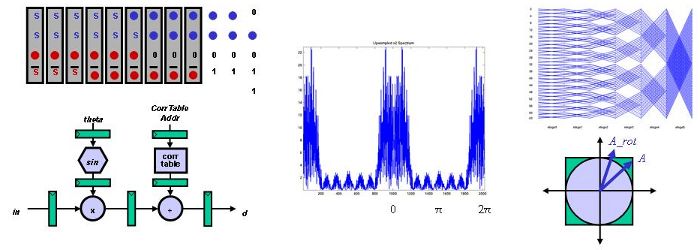
Visit course website Digital signal processors, building blocks, and algorithms. Design and implementation of processor algorithms, architectures, control, functional units, and circuit topologies for increased performance and reduced circuit size and power dissipation. Goals: Through this course, students will develop the necessary skills to design simple synthesizable processors suitable for numerically intensive processing with an emphasis on small chip area and high-performance. Secondly, students will learn to design processors for simple digital signal processing tasks through the simultaneous design of DSP algorithms, processor architectures, and hardware design.Description
CS 123: A Hands-On Introduction to Building AI-Enabled Robots
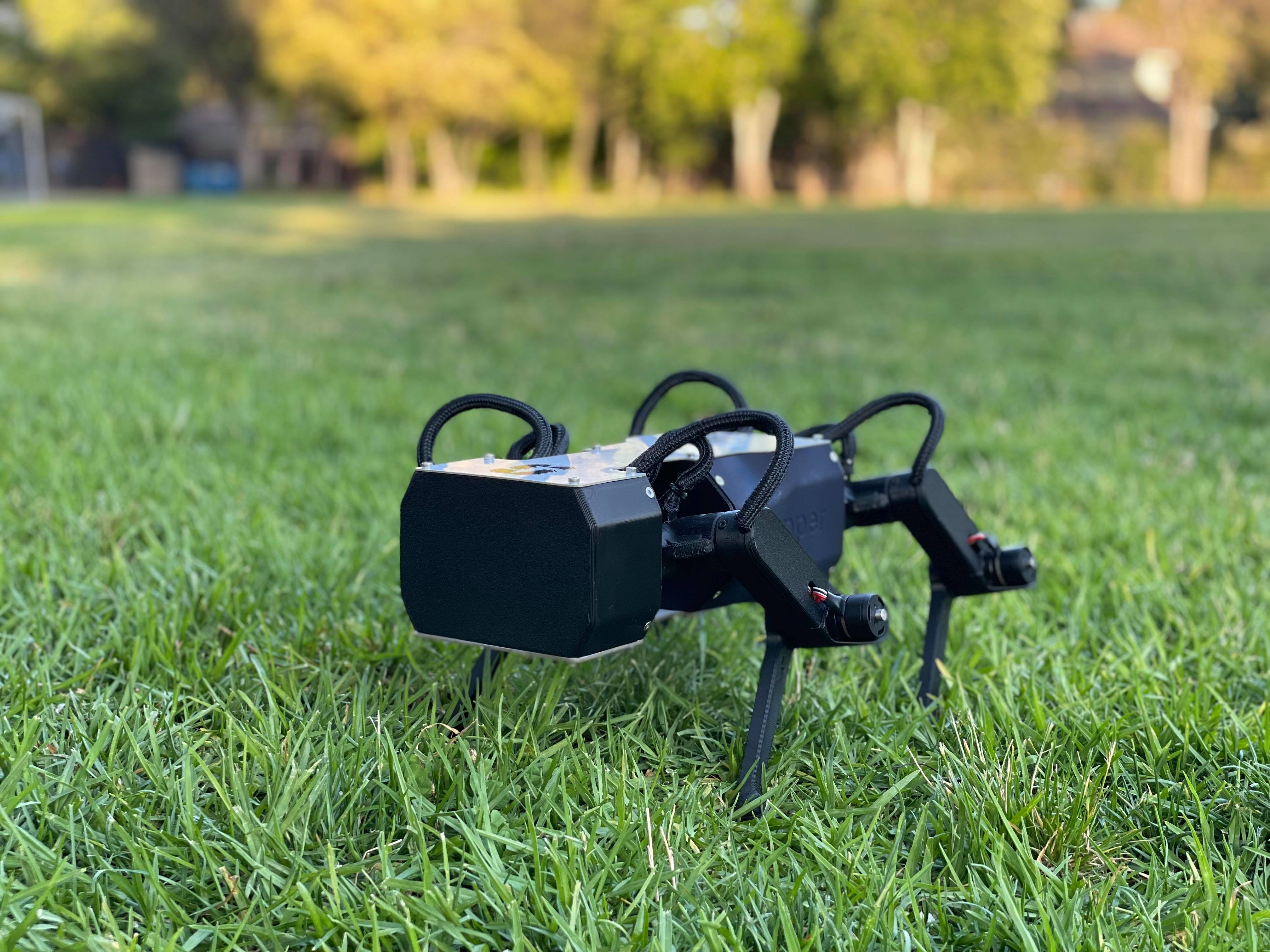
Visit course website This course offers a hands-on introduction to AI-powered robotics. Unlike most introductory robotics courses, students will learn essential robotics concepts by constructing a quadruped robot from scratch and training it to perform real-world tasks such as navigation and command following. The course covers a broad range of topics critical to robot learning, including motor control, forward and inverse kinematics, system identification, simulation, and reinforcement learning. Through weekly labs, students will construct and program an agile robot quadruped named Pupper. In the final few weeks, students will undertake an open-ended project, such as training Pupper to perform agile movements, developing a vision system to allow Pupper to play fetch, or adapting large language models to enable Pupper’s ability to communicate with humans. Researchers from Google DeepMind, Hands-On Robotics, and Toyota Research Institute will give lectures during the quarter on their work teaching robots new skills using reinforcement learning.Description
6.205/[6.111] Digital Systems Laboratory I
Visit course website 6.205/[6.111] investigates digital design in the context of Field Programmable Gate Arrays (FPGAs), however many of the topics we go over are applicable to the field of digital design as a whole. The class uses the Verilog Hardware Description Language, iVerilog for simulations, and the Vivado/Xilinx/AMD ecosystem for a toolchain and hardware. The primary goal is to actually get in and build something and get it working and to see the good and the bad and the beautiful of hardware design. The first half of the class is devoted to lectures, problem sets, and labs. The latter half of the class is focused on large final projects. There are no exams. The class has a significant technical communication component and therefore counts as a CI-M.Description
Notes
![6.205/[6.111] Digital Systems Laboratory I course header](https://ocw.mit.edu/courses/6-111-introductory-digital-systems-laboratory-spring-2006/06faa568a75d3e9498da09d18f598590_6-111s06.jpg)
6.111 Digital Systems Laboratory I
Visit course website 6.111 is reputed to be one of the most demanding classes at MIT, exhausting many students’ time and creativity. The course covers digital design topics such as digital logic, sequential building blocks, finite-state machines, FPGAs, timing and synchronization. The semester begins with lectures and problem sets, to introduce fundamental topics before students embark on lab assignments and ultimately, a digital design project. The students design and implement a final digital project of their choice, in areas such as games, music, digital filters, wireless communications, video, and graphics. The course relies on extensive use of Verilog® for describing and implementing digital logic designs on state-of-the-art FPGA.Description
CS 168 Introduction to the Internet
Visit course website This course is an introduction to the Internet architecture. We will focus on the concepts and fundamental design principles that have contributed to the Internet's scalability and robustness and survey the various protocols and algorithms used within this architecture. Topics include layering, addressing, intradomain routing, interdomain routing, reliable delivery, congestion control, and the core protocols (e.g., TCP, UDP, IP, DNS, and HTTP) and network technologies (e.g., Ethernet, wireless).Description

CS 149 Parallel Computing
Visit course website From smart phones, to multi-core CPUs and GPUs, to the world's largest supercomputers and web sites, parallel processing is ubiquitous in modern computing. The goal of this course is to provide a deep understanding of the fundamental principles and engineering trade-offs involved in designing modern parallel computing systems as well as to teach parallel programming techniques necessary to effectively utilize these machines. Because writing good parallel programs requires an understanding of key machine performance characteristics, this course will cover both parallel hardware and software design.Description
Notes
Helpful Learning Resources
Cornell Virtual Workshop
Visit course website The Cornell University Center for Advanced Computing (CAC) is a leader in the development and deployment of Web-based training programs. Our Cornell Virtual WorkshopSM learning platform is designed to enhance the computational science skills of researchers, accelerate the adoption of new and emerging technologies, and broaden the participation of underrepresented groups in science and engineering. Over 350,000 unique visitors have accessed Cornell Virtual Workshop training on programming languages, parallel computing, code improvement, and data analysis. The platform supports learning communities around the world, with code examples from national systems such as Frontera, Stampede2, and Jetstream2.Description

Nvidia GPU Gems 3
Visit course website Composition, the organization of elemental operations into a nonobvious whole, is the essence of imperative programming...Description